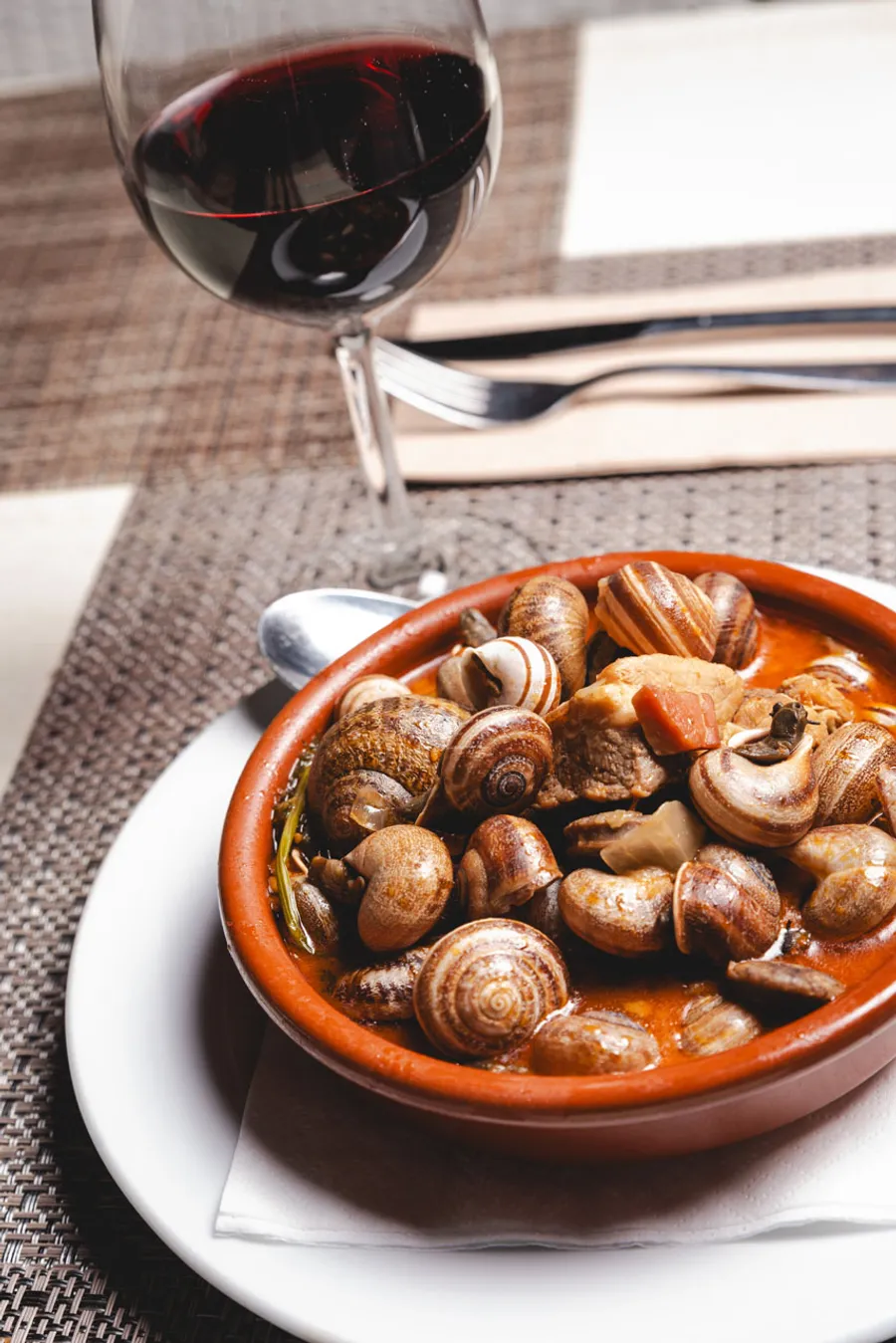
Grandma's Snails
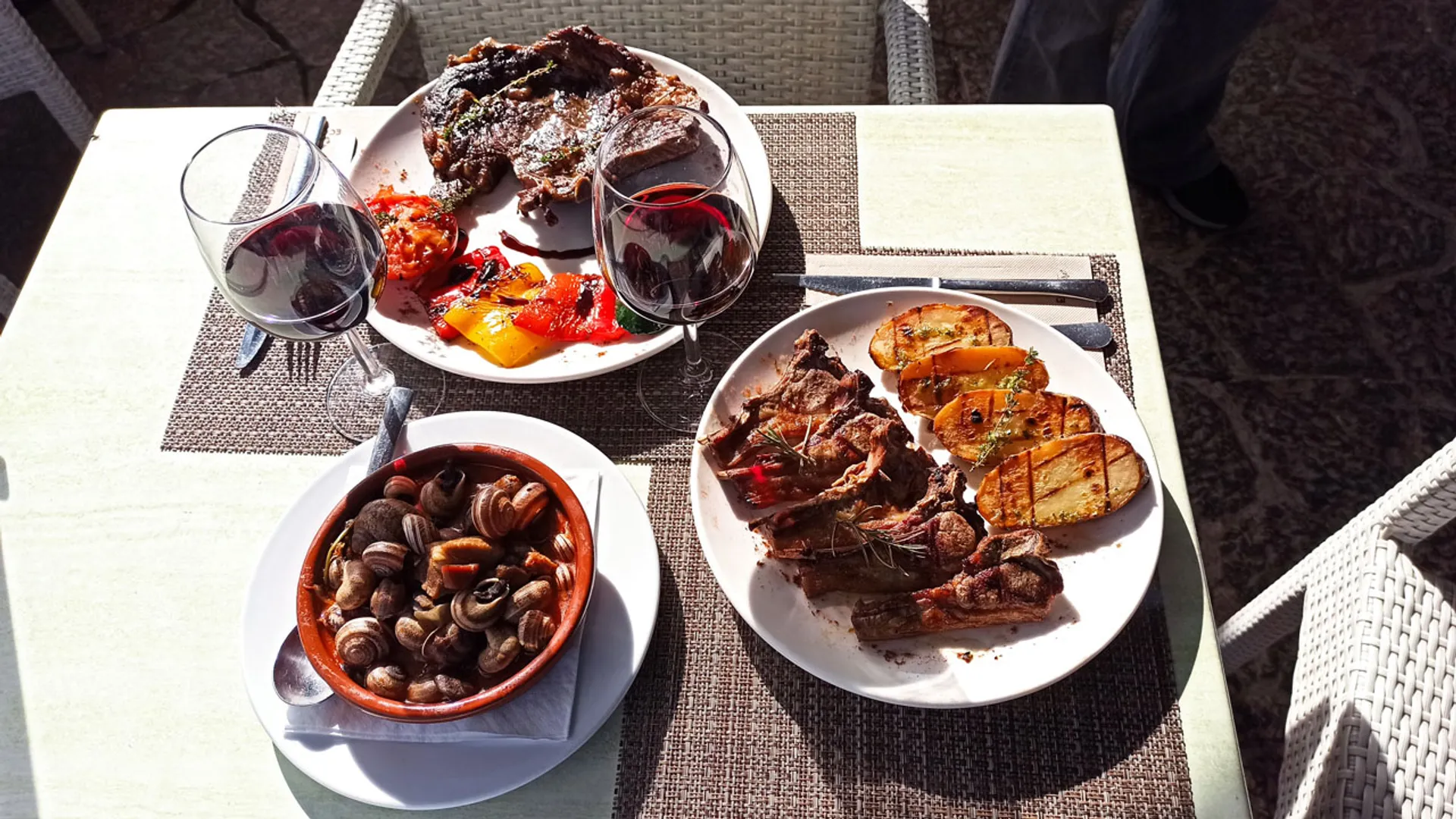
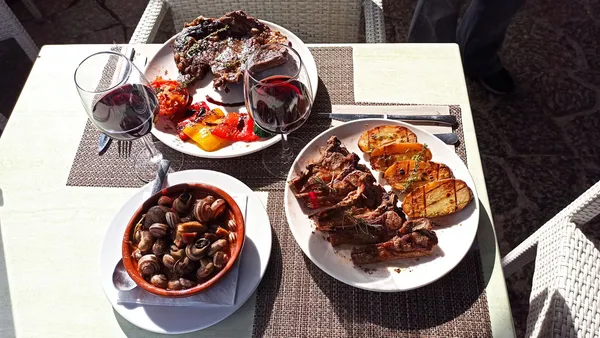
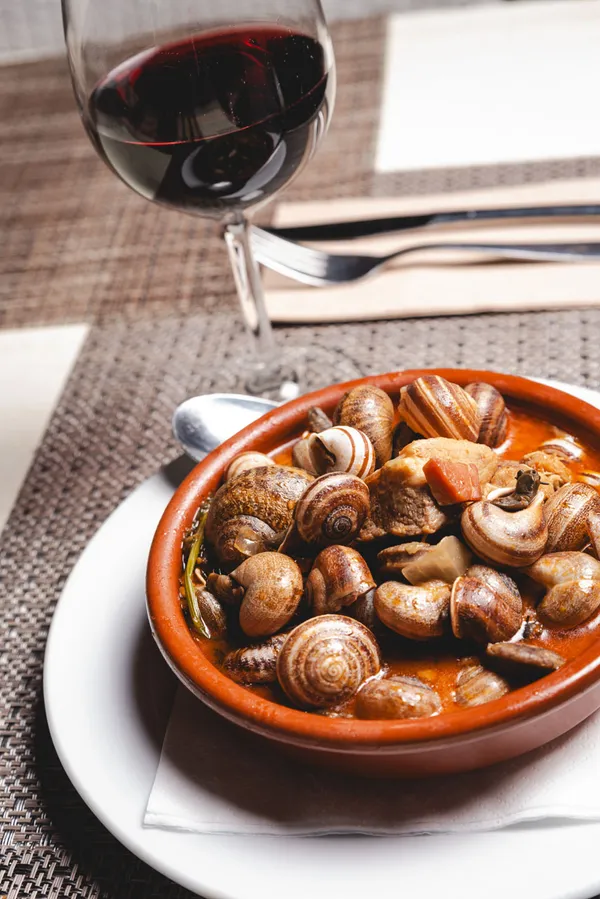
€13.50Caragols, grandma's way — three days of preparation, simmered in herb broth. The truth about Mallorcan snails.
Enthält: Molluscs


The place where Mallorcan gastronomy comes to life — with flavour, tradition, and passion.
Authentic Mallorcan cuisine
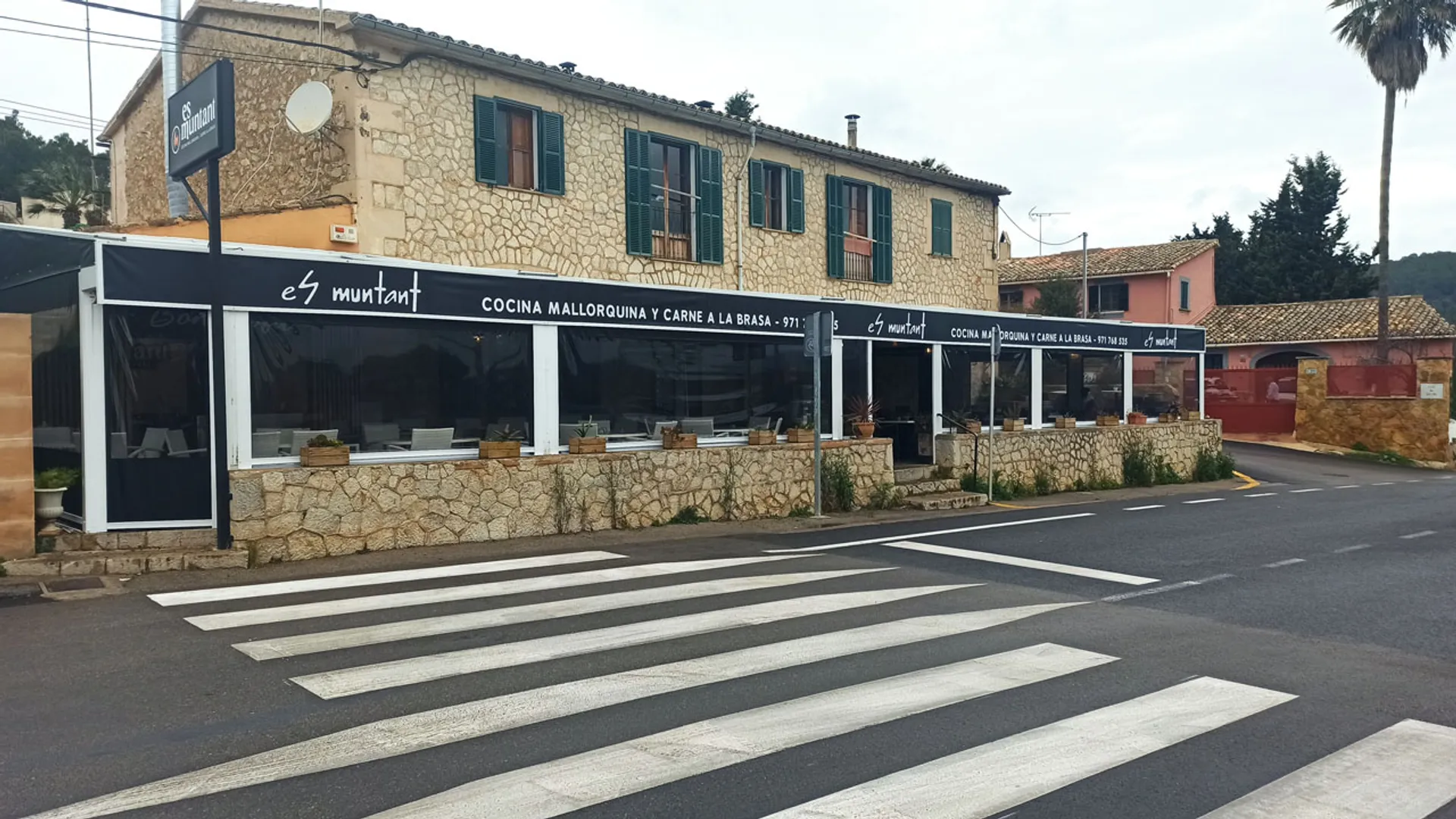
At Es Muntant we cook with local ingredients and recipes passed down through generations. From the wood-fired grill to fresh fish from the daily catch, every plate tells a Mallorcan story. Just minutes from Palma, in the traditional Establiments quarter.
Six flavours, one tradition — explore them one by one.
01 / 06
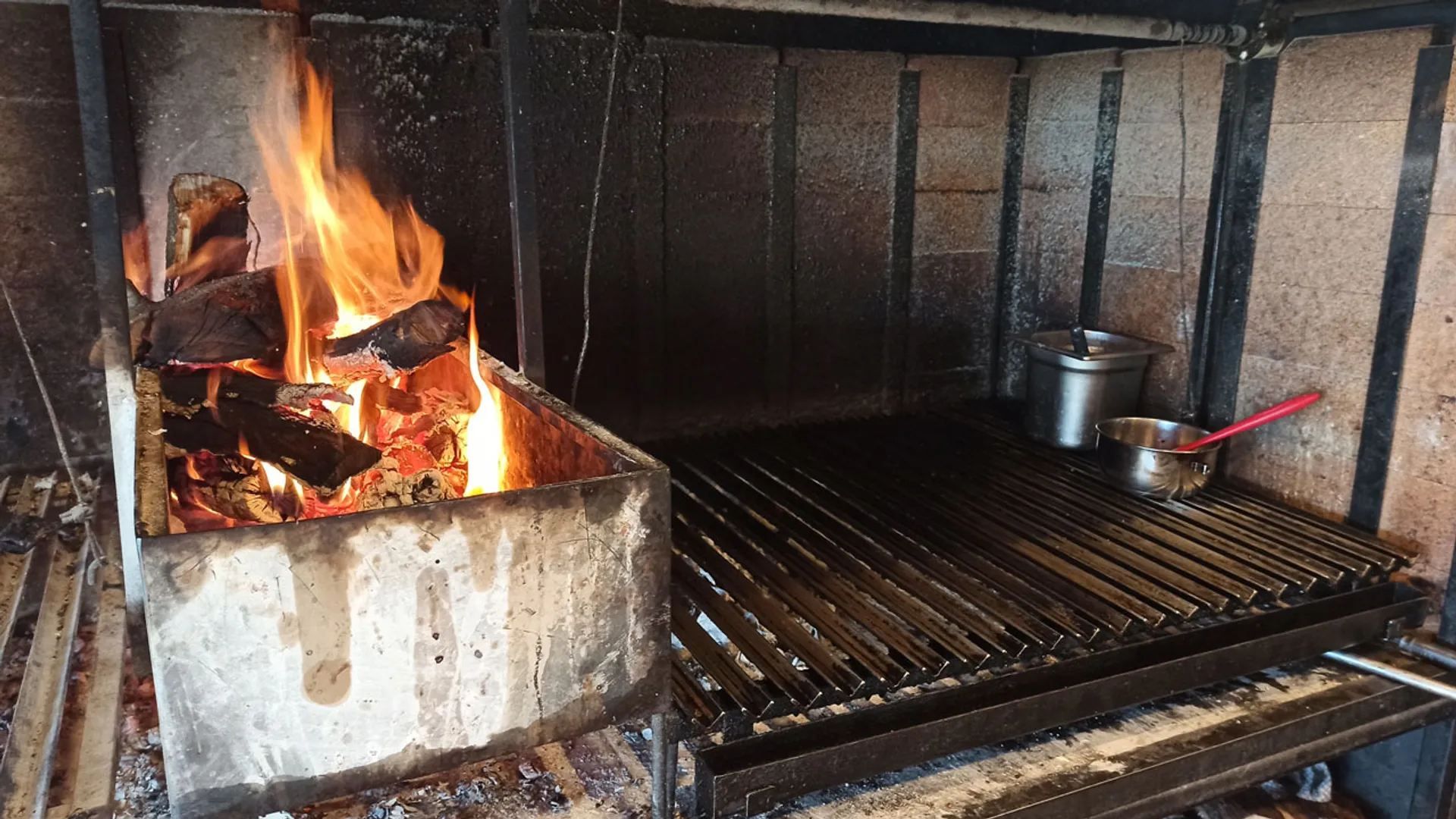
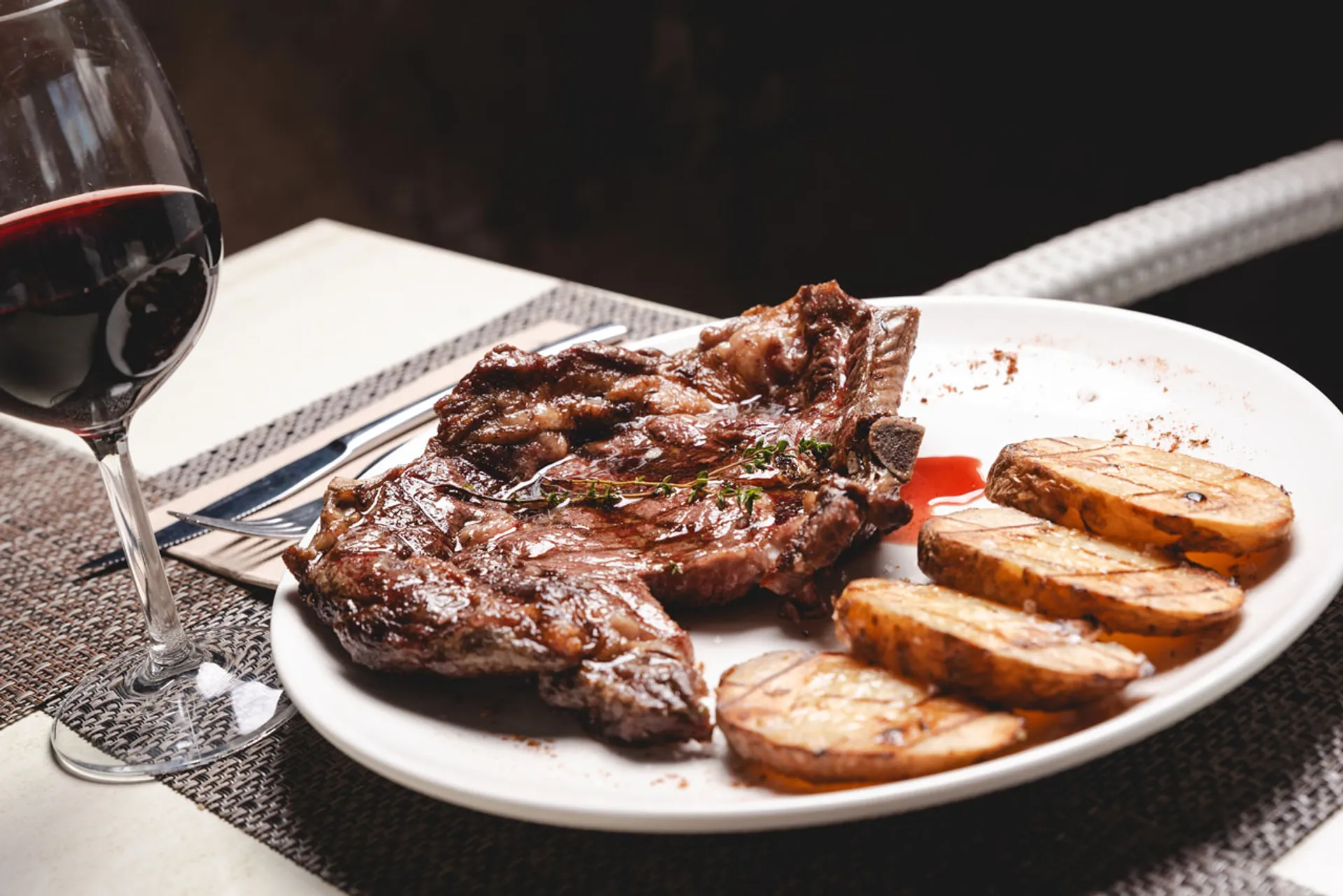
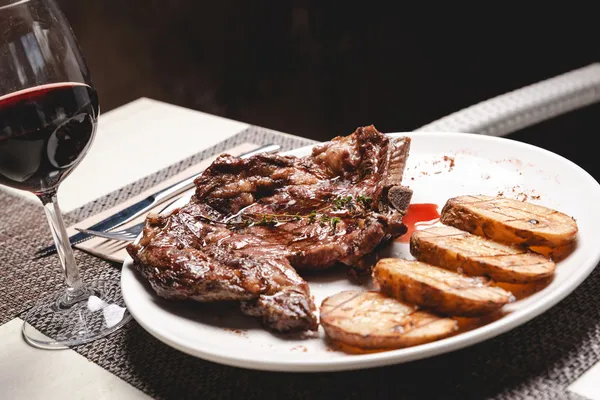
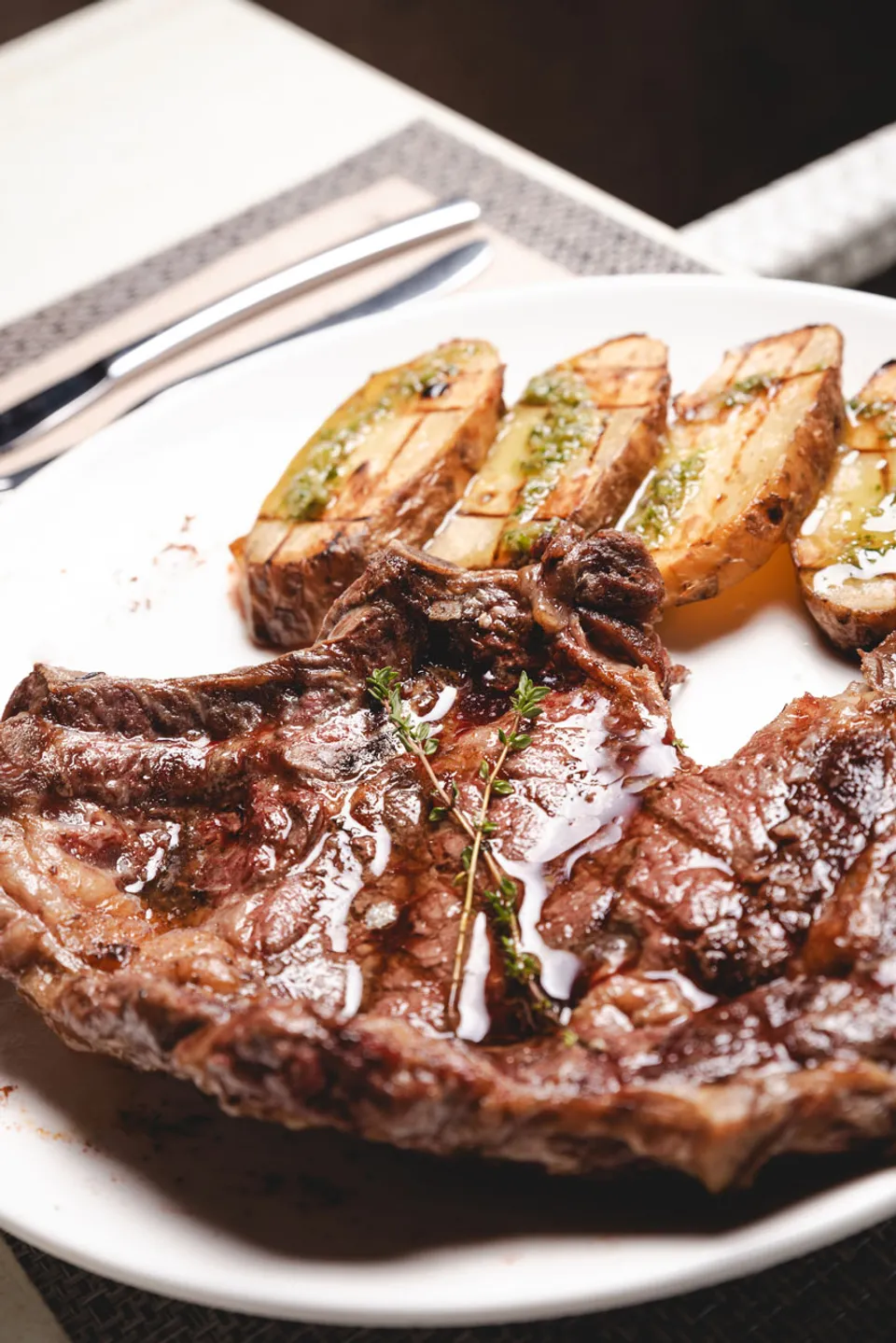
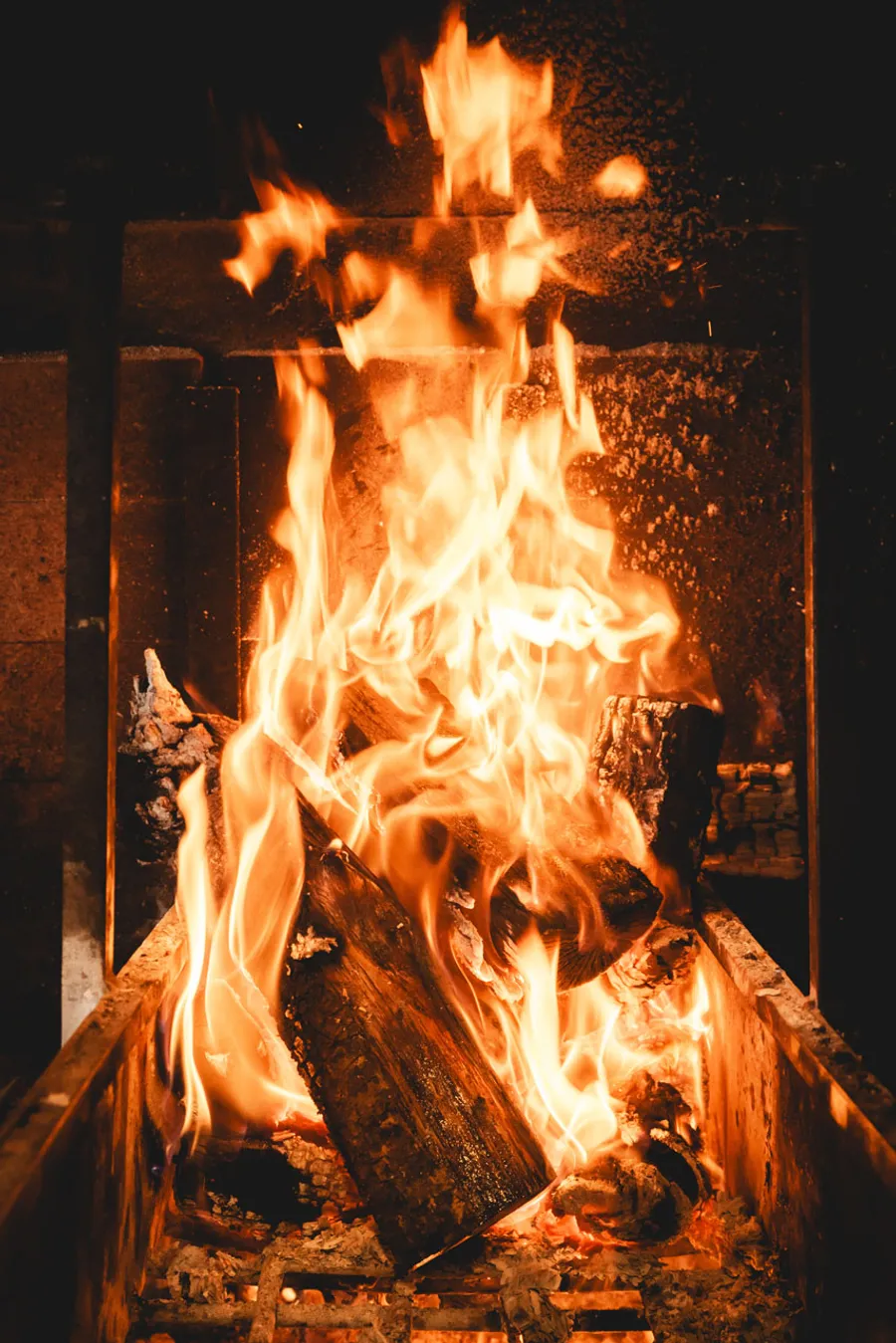
Meats and fish flame-cooked over olive-wood embers. Entrecote, lamb, sea bass, cuttlefish and seasonal vegetables — flavour only fire delivers.
02 / 06
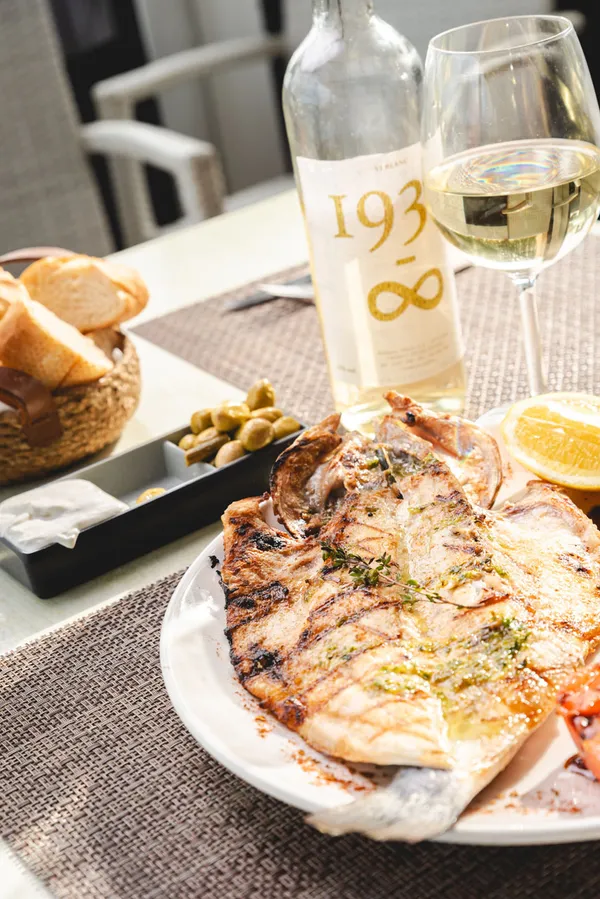
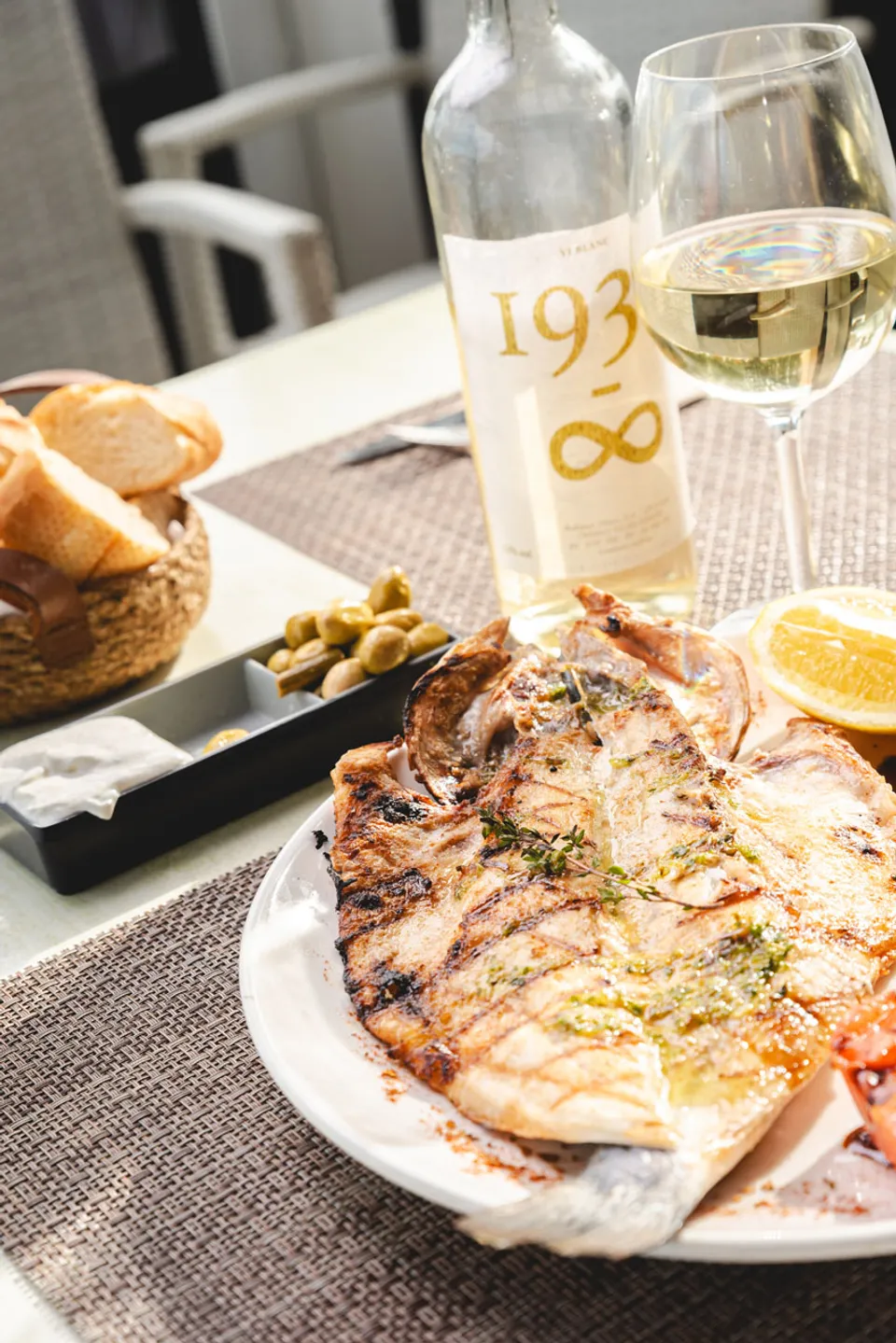
Sea bass, gilt-head bream and cuttlefish straight from the local fish market. Mediterranean cooking, no shortcuts: whole fish, fresh herbs, Mallorcan olive oil.
03 / 06
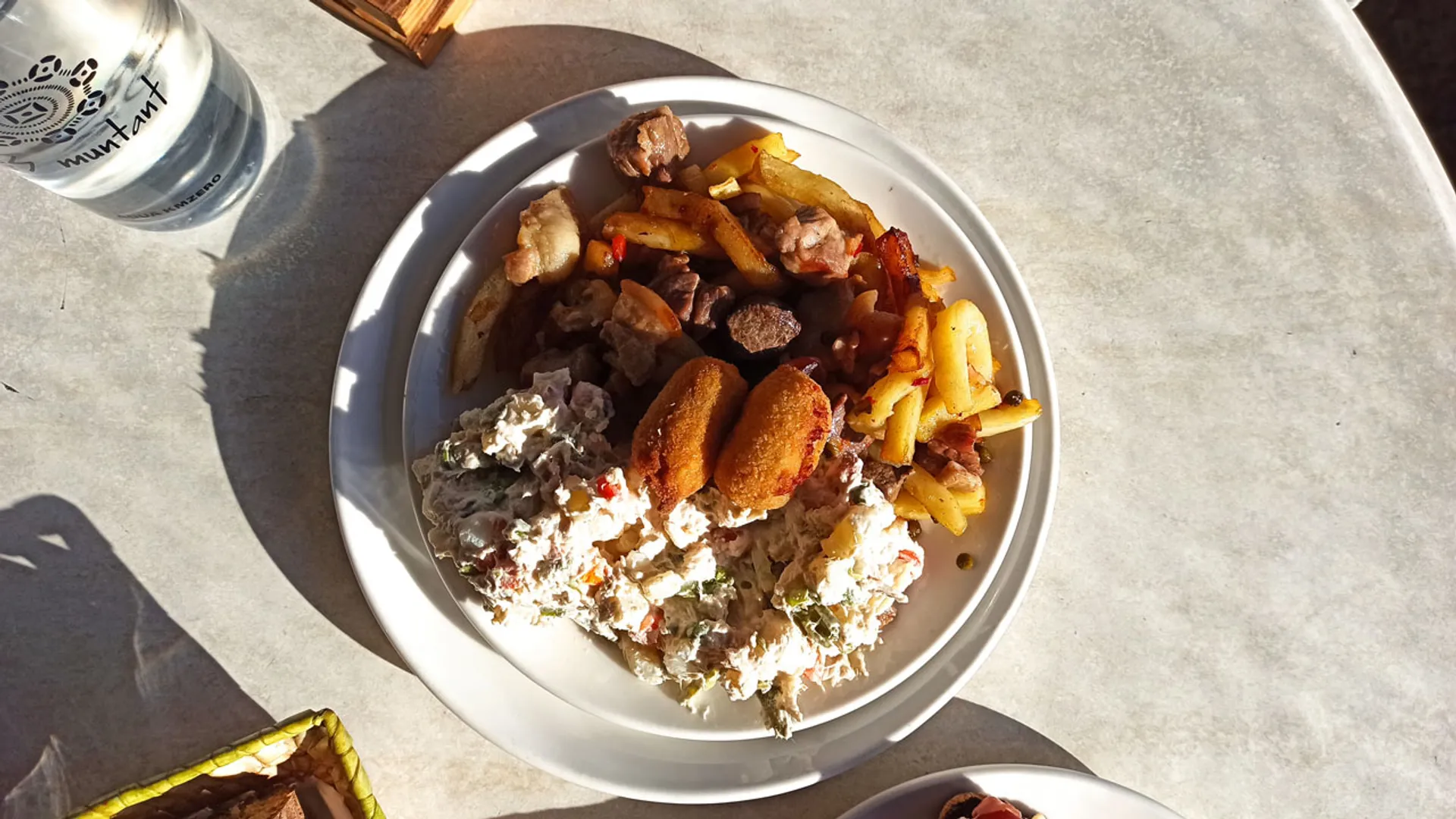
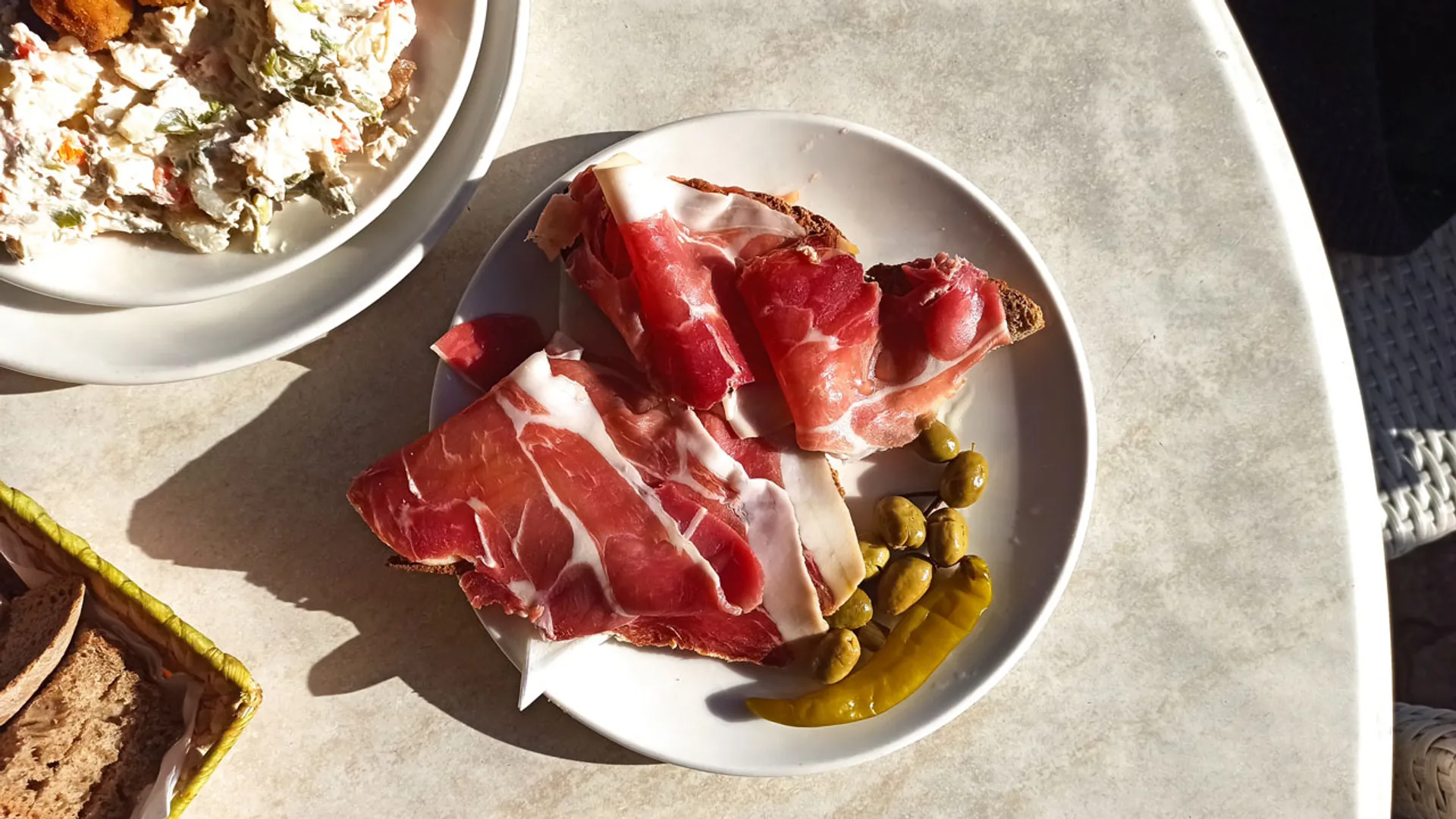
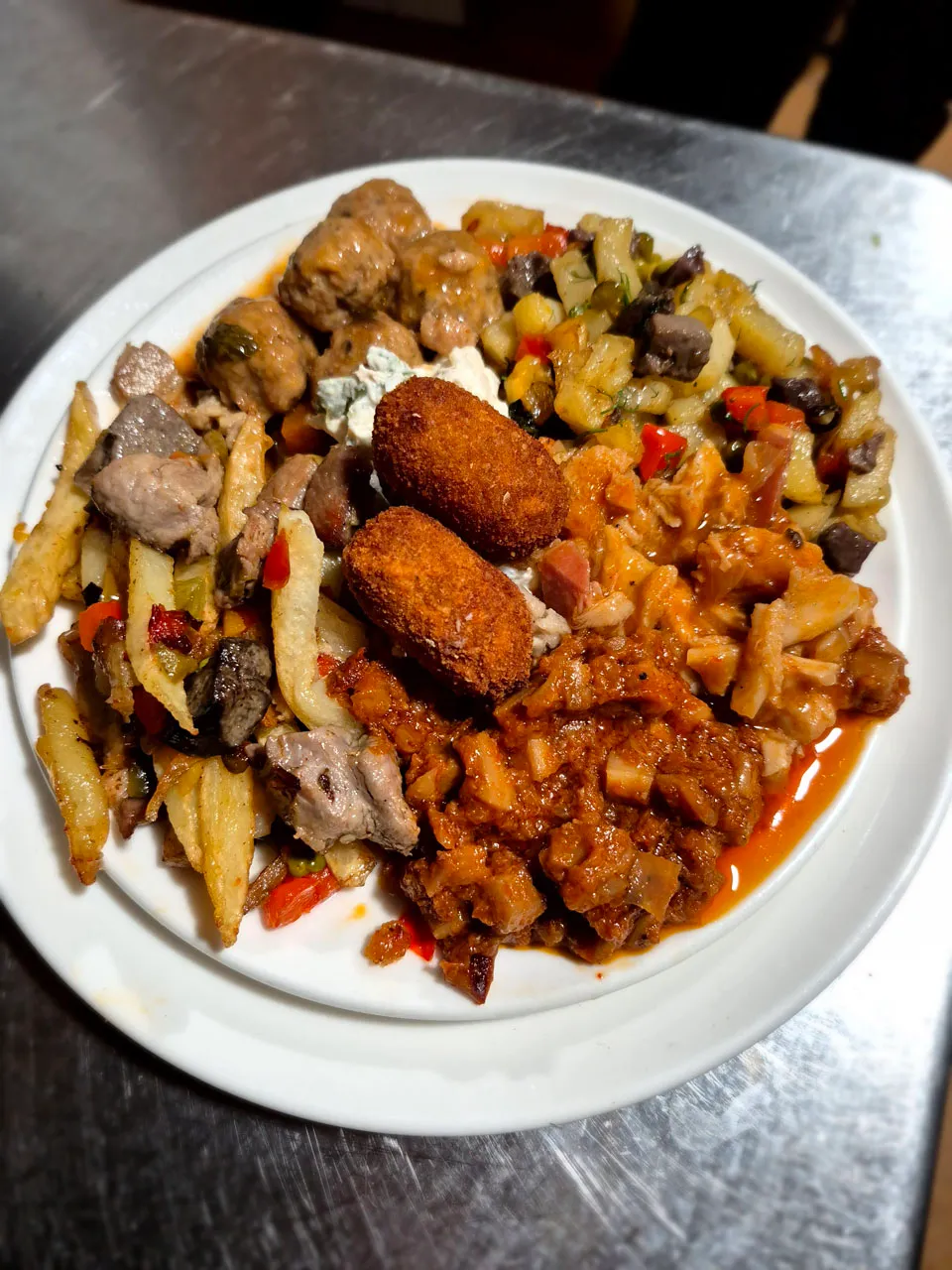
The authentic variat mallorquí: a sharing platter of traditional tapas — taste the island in one sitting. Small plates, big flavour.
04 / 06
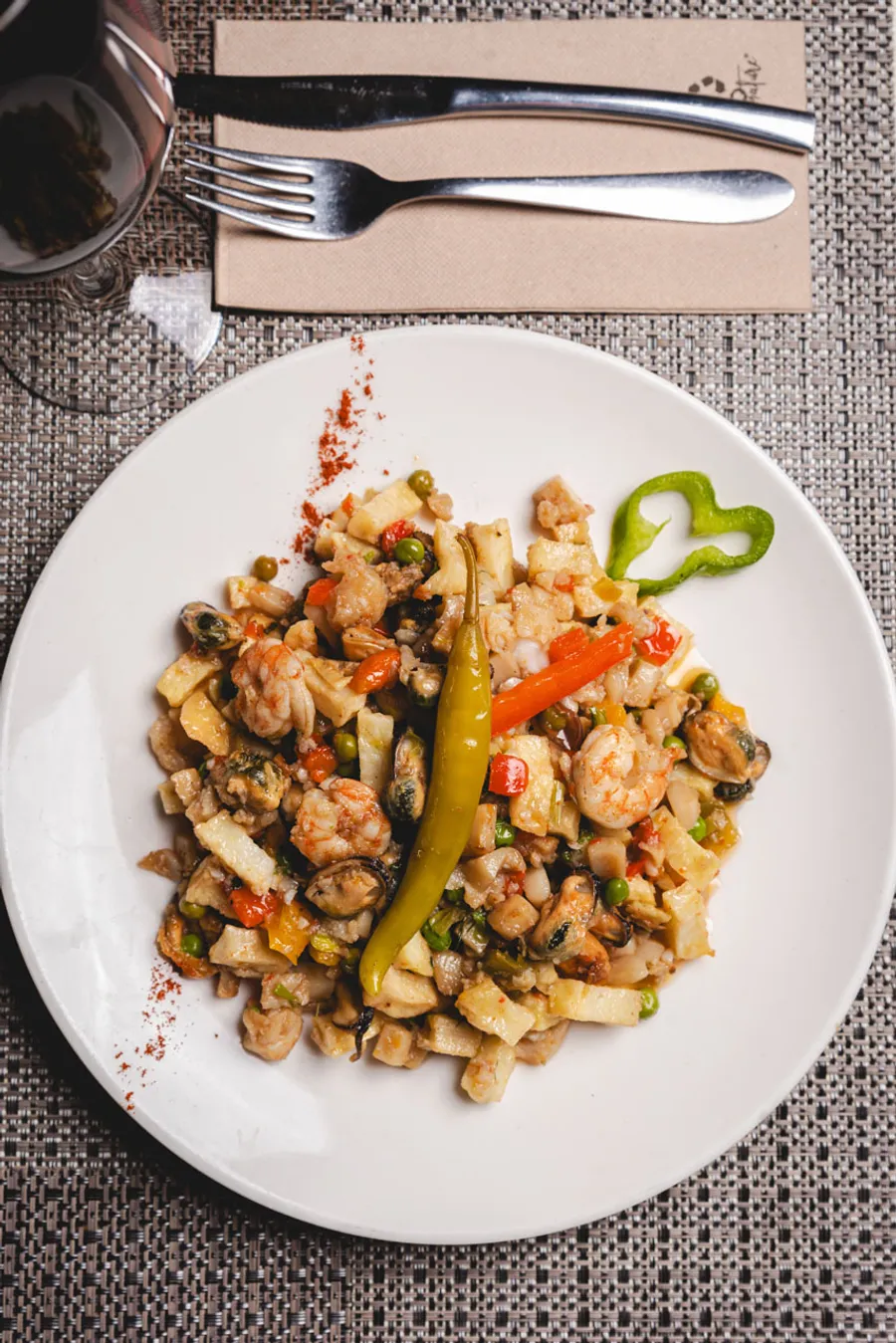
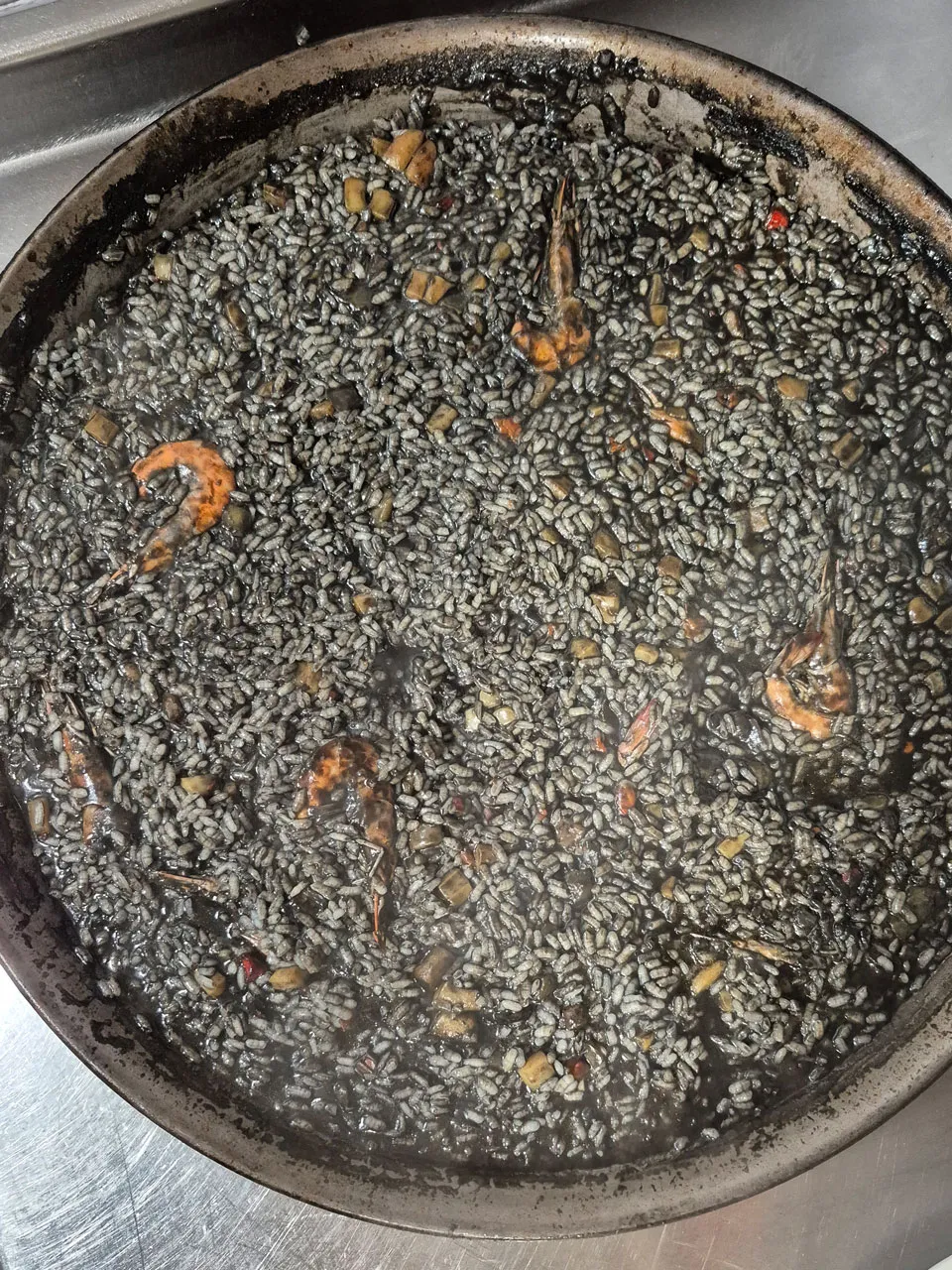
Mixed paella, squid-ink paella and seafood paella. Made to order with homemade stock and bomba rice. Minimum two people.
05 / 06
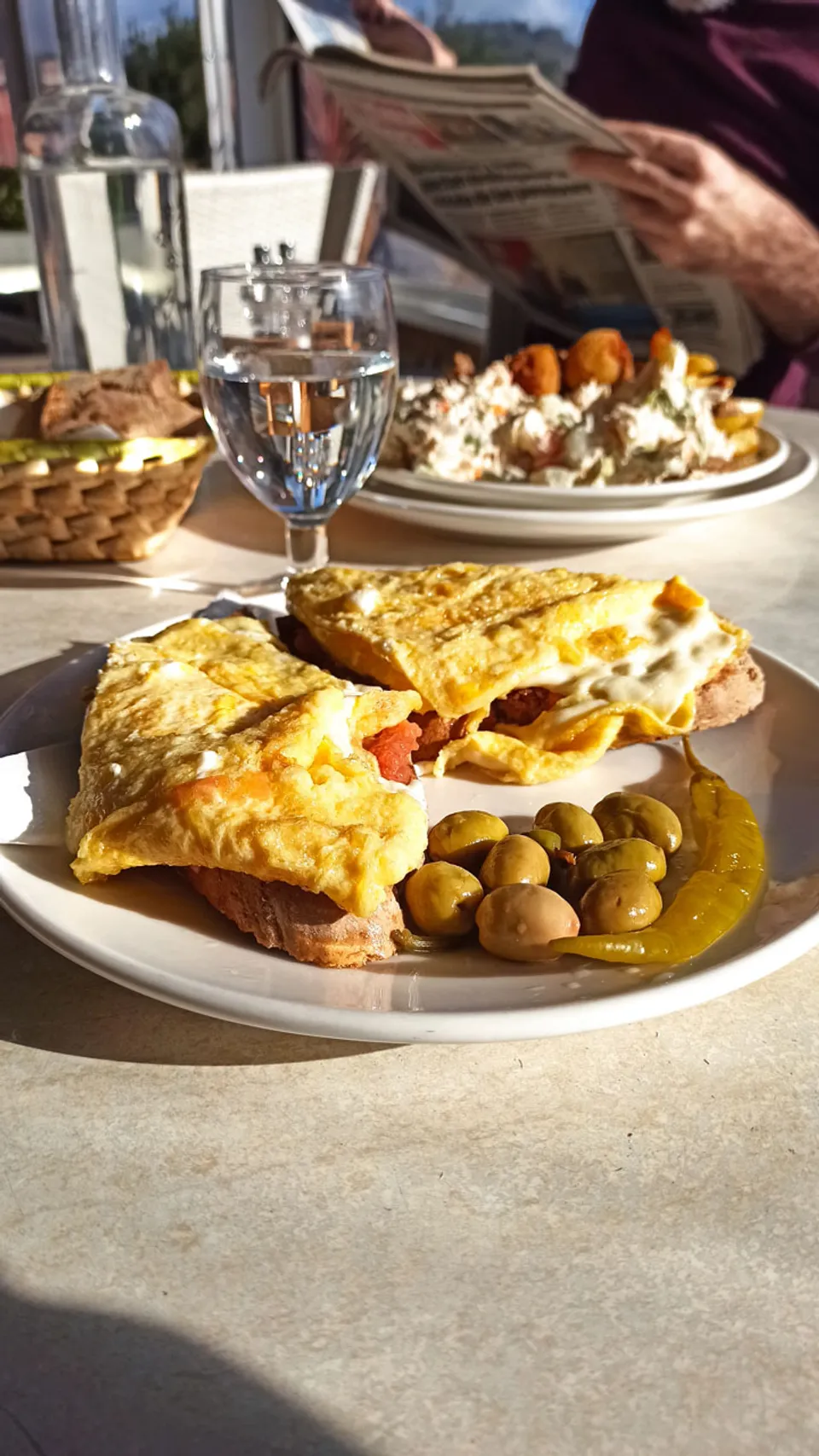
Traditional Mallorcan country bread with sobrasada, camaiot and Mahón cheese. Nine varieties including our exclusive Pa amb Oli Muntant with homemade alioli.
06 / 06
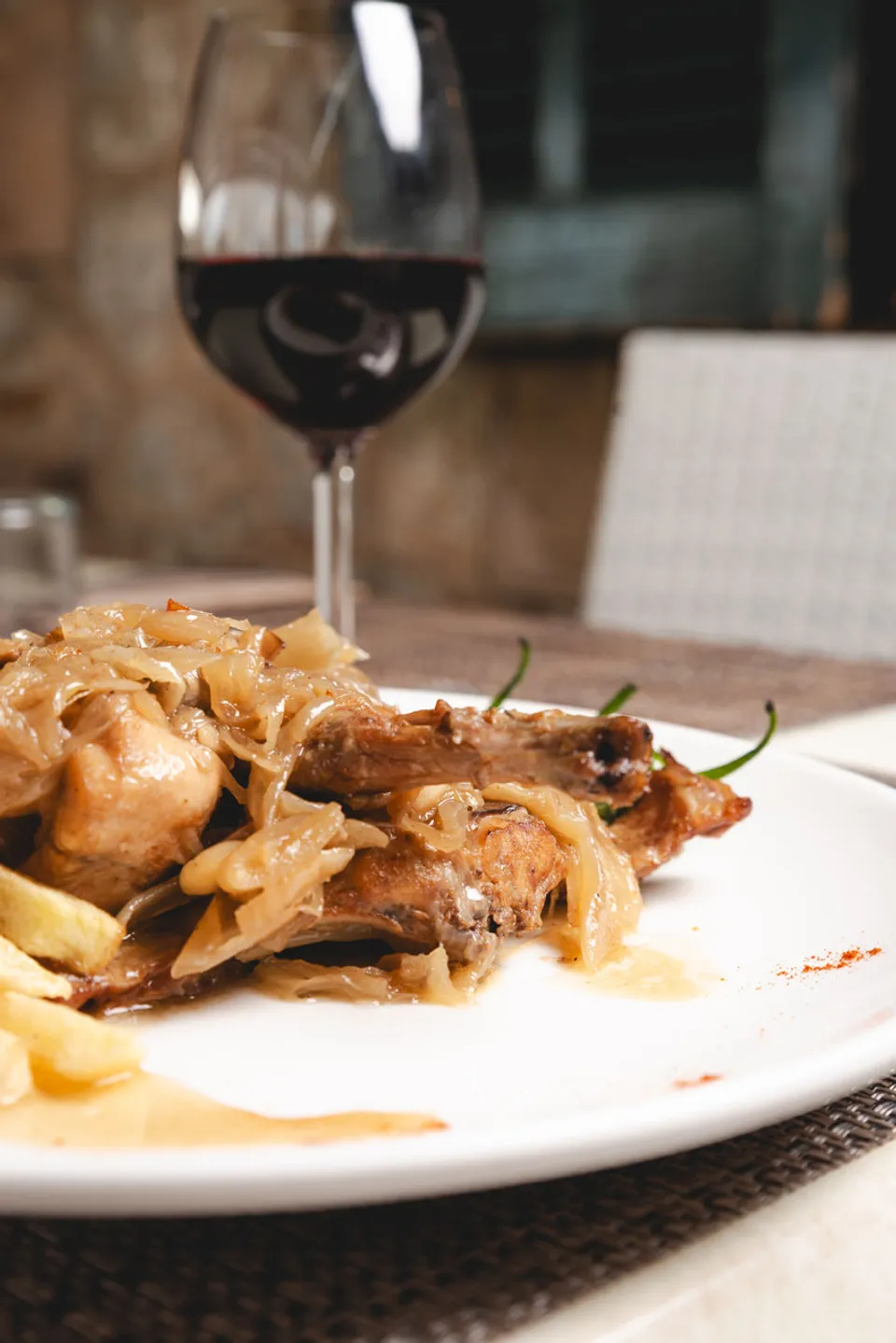
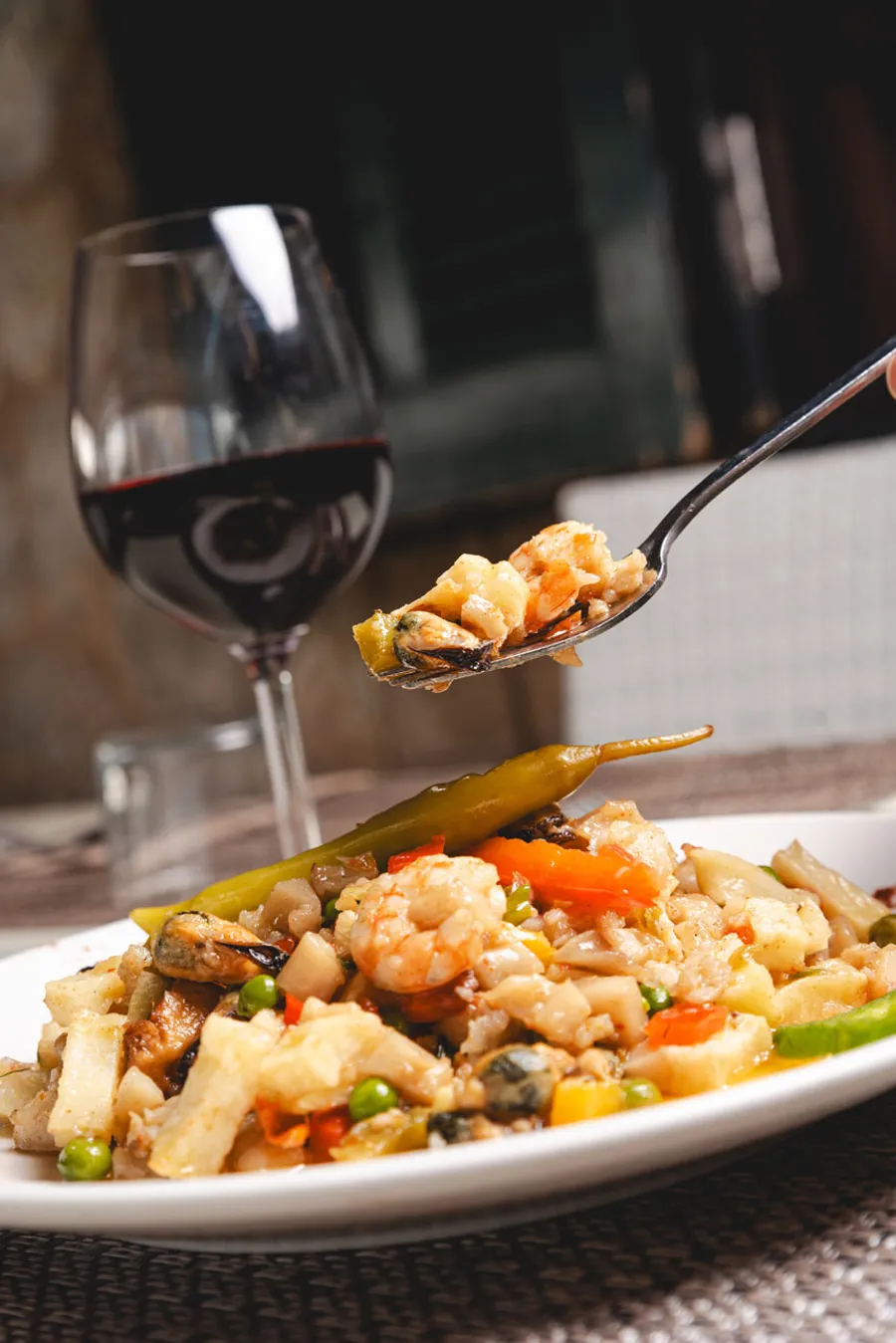
Homemade Mallorcan lunch Wednesday to Saturday: starter, main, dessert and drink from €15.90. Changes daily with seasonal produce.
Reservations
Reservations recommended Thursday through Saturday.
Pa amb Oli
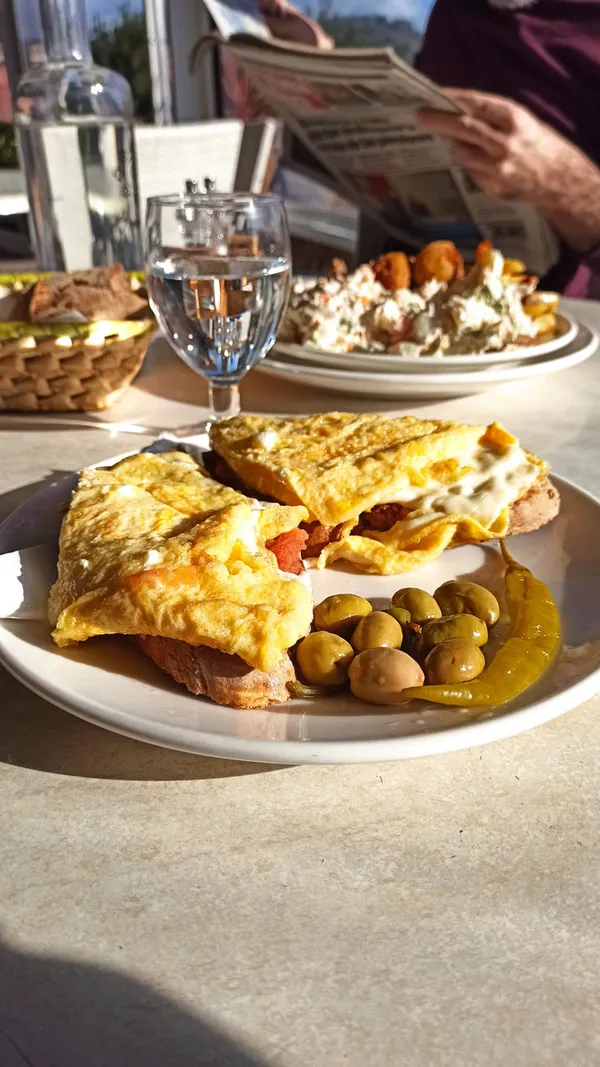
Mallorcan country bread with tomato, olive oil and salt — and nine different ways of finishing it. Prepared fresh every day, always with ingredients from the island.
What Mallorcan cuisine is
**Mallorcan cuisine** sits at the crossroads of three heritages and a piece of land. The root is Catalan — Jaume I's conquest in 1229 brings with it the techniques of Catalan cooking, including the sofregit, the picada and the pot-cooked rices. Behind that lies the Arab legacy of eight centuries of Al-Andalus: the cultivation of almonds, sugar, citrus and the sweet spices (cinnamon, cumin) that mark dishes like arròs brut or gató d'ametlla. The French influence arrives with the Bourbons and with the British presence in Menorca — mahonesa, mustard, refined pastry techniques.
Layered onto that is an island cuisine. What got cooked for centuries was what the dryland gave (almond, olive, cereal), the kitchen garden gave (ramellet tomatoes, peppers, winter vegetables), the yard gave (pig, rabbit, lamb) and the sea gave (fish from the auction). Pork was preserved with salt and paprika as sobrasada and butifarrón; oil in carboys; tomatoes hung from the rafters in bunches.
The defining trait is cuina d'aprofitament — the cooking of using what's already there. Mallorcan sopas are born from the bread that's left over; arròs brut simmers leftover meat with a fistful of spices; Mallorcan frito uses the offal from the lamb just slaughtered. Every dish is the answer to a concrete question: what do I do with this before it spoils? That answer, repeated for centuries in domestic kitchens, has produced the cuisine you find today on restaurant tables like ours.
Eight ingredients that define Mallorcan cuisine
Without these eight ingredients, Mallorcan cuisine doesn't exist. Each one has its origin, its label, and its way of being used. The difference between a competent Mallorcan dish and a good one almost always lives here.
Raw cured sausage of black Mallorcan pig, sweet paprika and salt. Spreadable paste, deep red, cured between two and six months depending on the casing. Protected Geographical Indication since 1996. Eaten raw on bread, melted on the grill until it weeps oil, stirred into stews like arròs brut. What separates ordinary sobrasada from sobrasada de Mallorca is the pig — ideally porc negre — and the paprika. Without those two, it's a different sausage.
Cooked Mallorcan sausage, related to morcilla but without blood and with the fat visible in mosaic. Made with the meat and fat left from the slaughter, pressed and stuffed into pig stomach. Cooked, then cured. Sliced thin and served as a starter or on pa amb oli. It joins the variat mallorquí on any self-respecting table. Camaiot is sobrasada's first cousin — same pig, same slaughter day — but a different technique and a different texture.
Mallorcan extra-virgin olive oil, with Denomination of Origin since 2002. Main varieties: mallorquina (soft, sweet) and arbequina (more fruit-forward). Mills in Sóller, Caimari, Felanitx. Used for everything — for frying, for raw finishing, for preserving. A good Mallorcan oil smells of green almond and cut grass. The difference with industrial oil shows in the first raw spoonful on bread: nothing in common.
Mallorcan variety of small, bunch-grown tomato with a thick skin, hung in clusters from the rafters of every Mallorcan kitchen and lasting months without a fridge. This is the tomato of pa amb oli and of the sofregit. It's rubbed onto toasted bread: the pulp goes into the crumb, the skin stays in your hand. The season runs June to December; well-hung ramellets last until Easter. No ramellet, no pa amb oli.
Sweet red pepper, sun-dried and ground for Mallorcan paprika — the thing that colours the sobrasada and the sofregit. Distinct from Pimentón de la Vera (more smoked): the Mallorcan version is softer, redder, with a sweet edge. Once grown in family kitchen gardens and milled in village mills, today it survives in artisan production around Felanitx. When a sofregit takes on a deep red without bitterness, it almost always has Mallorcan paprika in it.
Almond from Mallorca, a mix of varieties (Vivot, Pou, Verdereta) that combine sweet with a touch of bitter. The island is covered in almond trees — more than five million by the last count. The Mallorcan almond goes into gató d'ametlla, into almond ice cream, into sopas, into Christmas turrón. The difference between an industrial almond and a freshly ground Mallorcan one is the oil: the fresh one doesn't taste rancid. The industrial one does.
Fresh fish from Palma's lonja — the daily auction that opens at five-thirty in the morning, where restaurateurs pick what came in overnight. Sea bass, gilt-head bream, cuttlefish, megrim, red mullet, scorpionfish, and raor in its short September season. What hits the table the same day has texture, flavour and price that frozen fish doesn't replicate. When a Mallorcan restaurant says fresh today, it should be able to name the boat.
Cow's-milk cheese from Menorca, with Protected Designation of Origin. Square shape from the cotton cloth it's pressed in, orange rind from the oil and paprika rubbed in during curing. Made as tierno (semi-cured) and curado (over five months). Goes with pa amb oli in every variant, gets grated over pasta with sobrasada. Although it's Menorcan, in Mallorca it's treated as a local ingredient — the two islands share more cooking than the sea between them divides.
Six traditional techniques
There aren't many techniques and they're old. What sets them apart is the patience they're applied with. A sofregit done in five minutes isn't sofregit; lamb on a gas grill isn't wood-fire lamb. The names travel, the results don't.
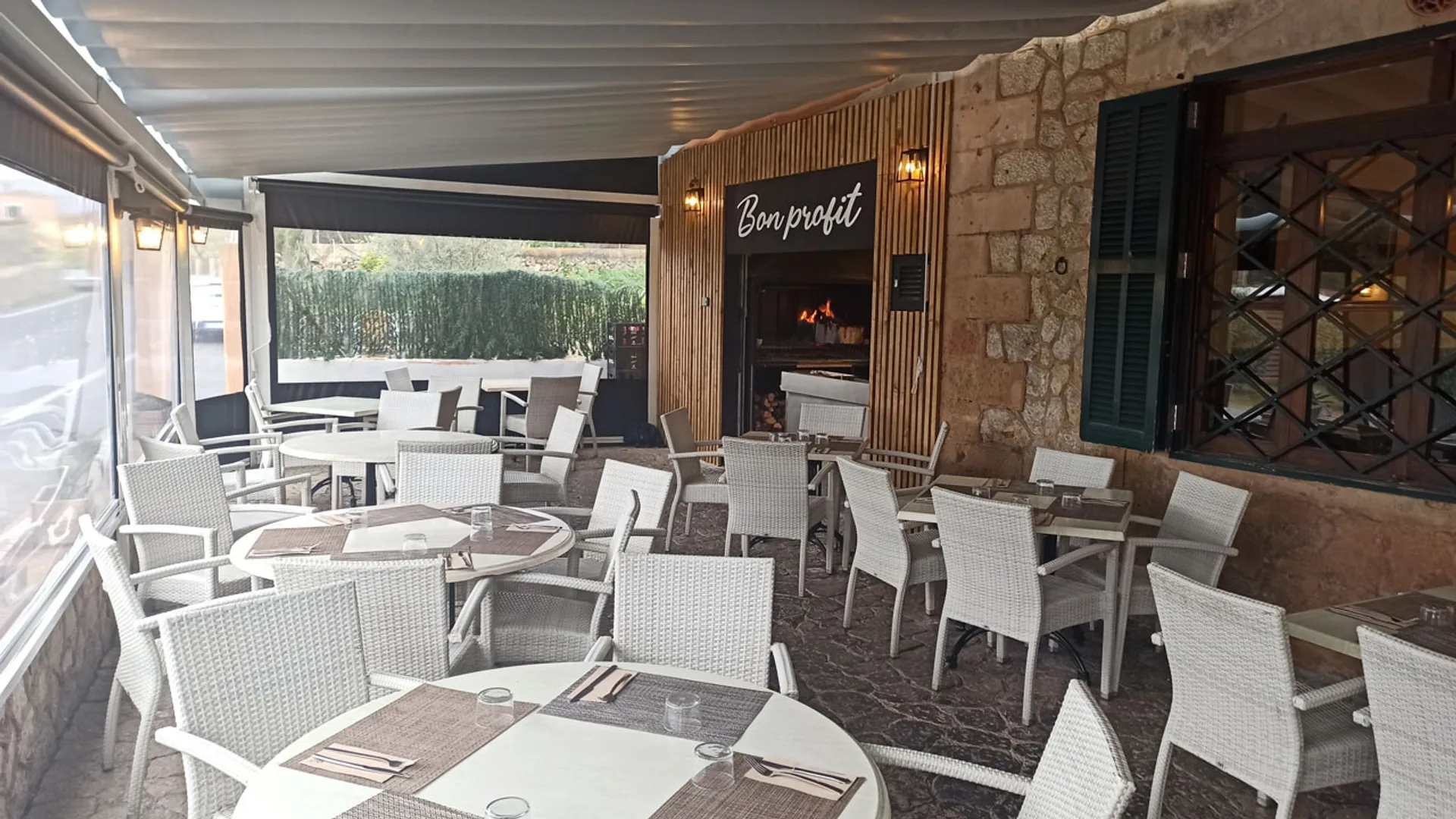
Embers of olive, holm-oak or almond wood — never gas. Meat and fish go past the fire twice: first hard heat to sear, then pulled to the edge to finish through. The difference with gas is the aromatic smoke and the radiation: gas roasts, wood cooks and perfumes. In Mallorca the wood grill is the method for entrecote, lamb, cuttlefish, sea bass and seasonal vegetables. Without the wood, it's just a flat-top.
A vaulted brick oven, fired with wood until the walls hold heat for hours. Used to bake coques, roast suckling pig (porcella rostida) and lamb, finish the sopas, bake pan moreno. Temperature isn't set on a thermostat — it's set by moving the dish closer to or further from the embers. It's the technique that gives Mallorcan pan moreno its golden crust and damp crumb, and roast lamb its crackling skin.
The Catalan-Mediterranean cooking base: finely chopped onion sweated over a low flame for thirty or forty minutes until caramelised, then grated tomato and, depending on the recipe, garlic, paprika and herbs. It's the base of arròs brut, of sopas, of meat stews and pot-cooked rices. If it's done in under twenty minutes, it isn't sofregit — the onion has to lose all its water and turn gold. The difference between an average dish and a good one is usually decided here.
Preserving in vinegar, oil, garlic, bay leaf and paprika, applied to fish, partridge, rabbit or mackerel to keep them several days without refrigeration. Pre-fridge technique, recovered today for its flavour. Mallorcan escabeche is discreet on the vinegar — sharp but not aggressive. Goes with salads, served cold as a tapa, extends the season of oily fish. It needs rest: minimum twenty-four hours in the fridge for the flavours to settle.
Preserving with salt — the technique behind sobrasada, camaiot, butifarrón, cured ham and dried fish like bacalao. Salt draws the water out of the product and stops bacteria, allowing curing periods of months or years. In Mallorcan cooking, salt-curing is the foundation of the matança — the November or December day when the pig was killed and the year's sausages made. It still continues in rural butchers and family obradors.
Not a technique with a formal name — the principle of tumbet: every vegetable is fried in its own pan, in its own oil, in its own time. Potato first, drained; aubergine next, drained; pepper last. Then layered with concentrated tomato sauce and finished in the oven. The difference with frying everything together is in the texture: a properly made tumbet has every vegetable tender but holding shape. If it comes out wet, the method wasn't applied.
Four daily meal times
The Mallorcan eating clock has four stops. Tourist hours have flattened them, but each one keeps its character in homes and in restaurants that respect the tradition.
Second breakfast in the late morning, between the early coffee and lunch. On the table: pa amb oli with sobrasada, llonganissa or cheese, a piece of coca, a cortado coffee or a small beer. In the countryside it was always the worker's solid meal after three hours in the field. At Es Muntant we serve pa amb oli from nine — exactly for this window.
The day's main meal. Traditional structure: first plate (soup, salad or rice), second plate (meat or fish from the grill, frito, tumbet, stew), dessert, coffee. The window for the menú del día — we serve one Wednesday to Saturday — for Sunday family paellas and, in general, for the kitchen running at full tilt. The sobremesa with home-made liqueur is part of the ritual.
Mid-afternoon snack, especially with family. Usually sweet: a slice of gató d'ametlla, a piece of coca de patata, a cuartet, a couple of rubiols. With coffee, or in summer with almond granizado. In long-standing Mallorcan restaurants the berenada de tarda doesn't appear on the menu as such, but the cake is always ready if you ask.
Lighter dinner than midday lunch. Pa amb oli in its nine variants, variat to share, a cuttlefish or sea bass off the grill, sopas mallorquinas in winter. Mallorcan families eat dinner late — rarely before nine — and restaurants stretch service until eleven. At Es Muntant the kitchen closes at eleven, the grill half an hour before.
Sourcing
Fish from the Lonja, tomato from the Mercat, sobrasada from the village butcher — ingredients don't travel far before they reach your table.
Table set · fire on
Mallorcan cuisine tastes different when you eat it in its place: olive-wood embers, ramellet tomato off the day's harvest, sobrasada from the village butcher. Establiments — five minutes north of Palma.
4.2★ on Google · 2,166 reviews · Mallorcan cuisine by tradition
Tourist anchors
Distances and travel times to the landmarks visitors actually search for in Mallorca. Calculated as great-circle plus a road-network factor.
From Restaurant Es Muntant
13th-century Gothic cathedral in central Palma, facing the sea.
Mallorca's main airport, IATA code PMI.
Arrival point for western-Mediterranean cruise ships.
Circular 14th-century Gothic castle overlooking Palma Bay.
Transit hub: Sóller Train, Palma metro, regional TIB buses.
Central old-town square, artisan market.
Mountain village, former Carthusian monastery where Chopin stayed. UNESCO.
Neighbouring village, endpoint of the Camí des Correu (GR-221).
Coastal town ringed by mountains and orange groves — endpoint of the Sóller Train.
Coastal Tramuntana village on cultivated terraces.
Our classics
From the wood-fired grill through the variats to the pa amb oli — the classics of Mallorcan cuisine, each plate with its own story.
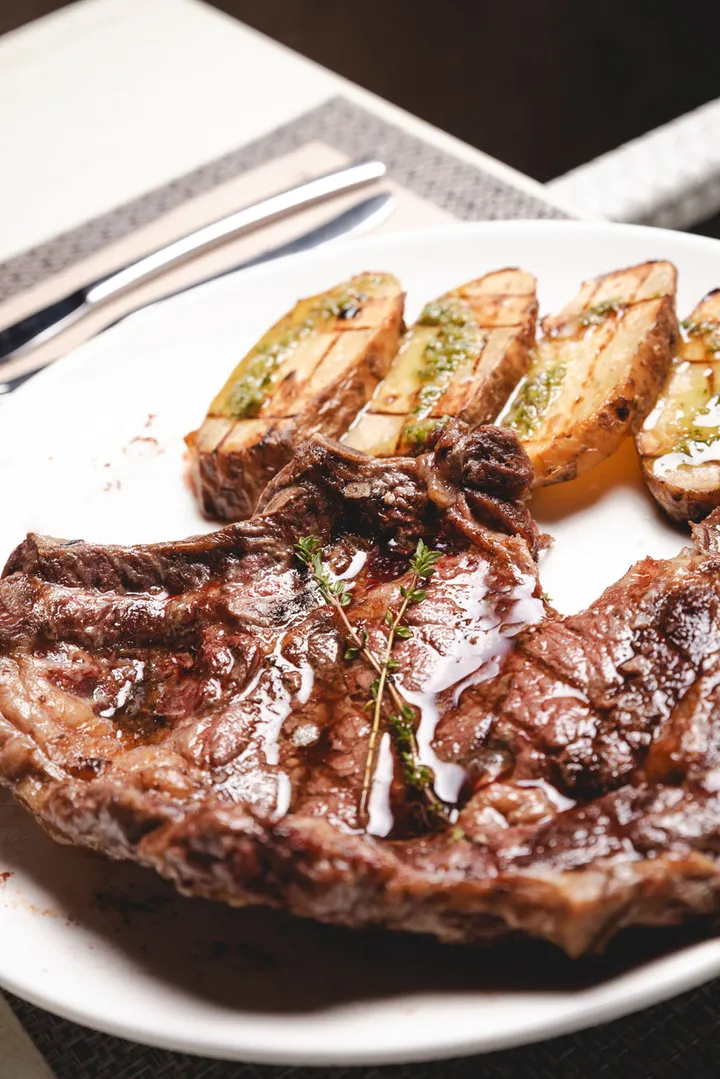
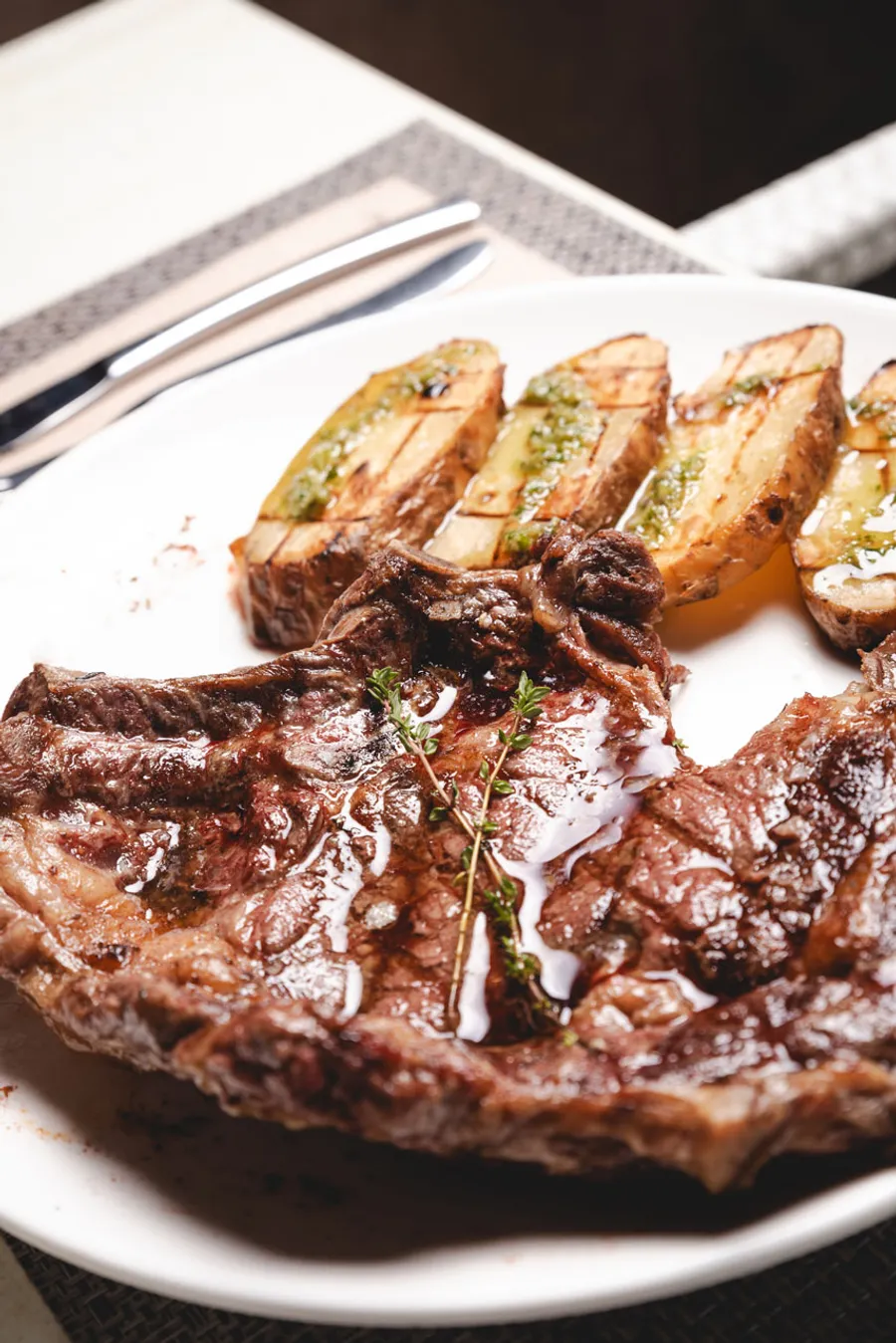
250 g over olive-wood embers
Learn more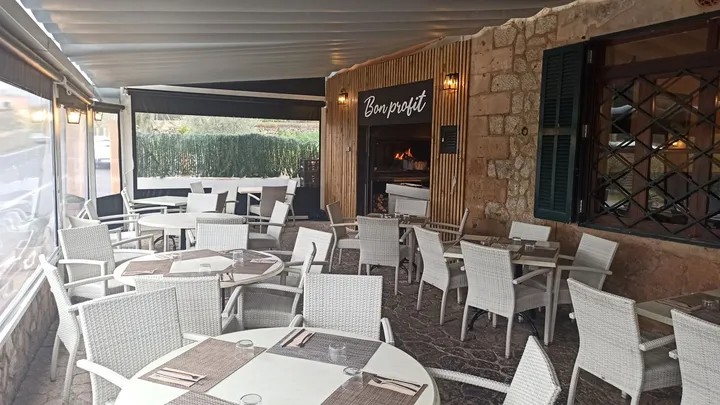
House alioli + sobrasada
Learn more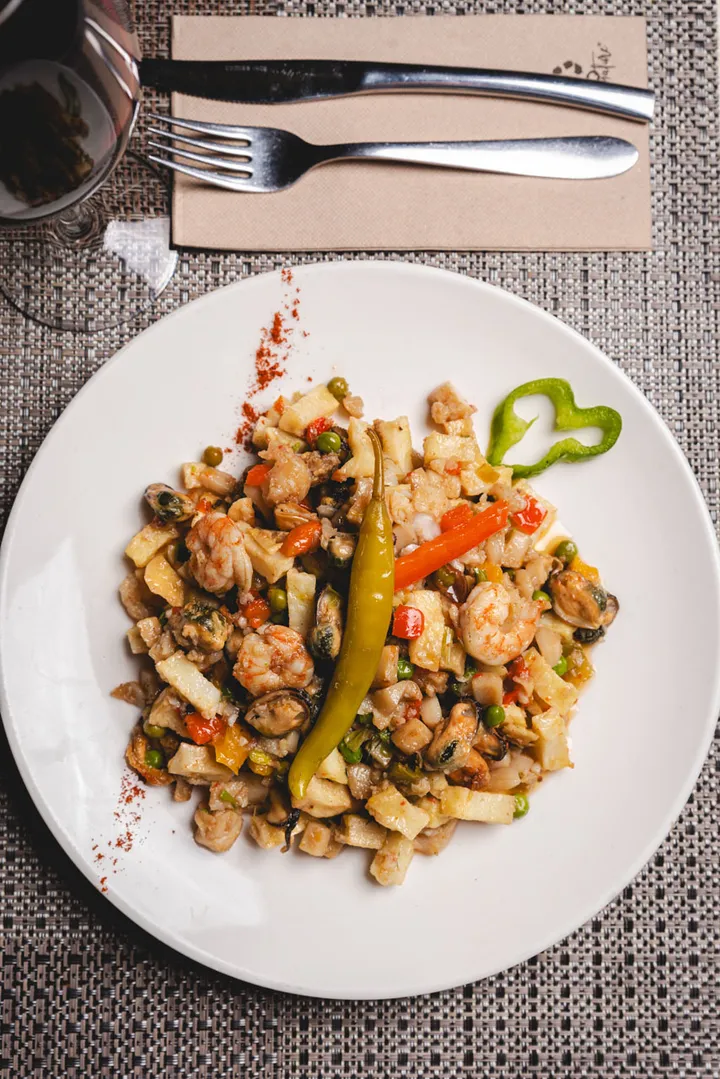
Classic island dish with lamb
Learn more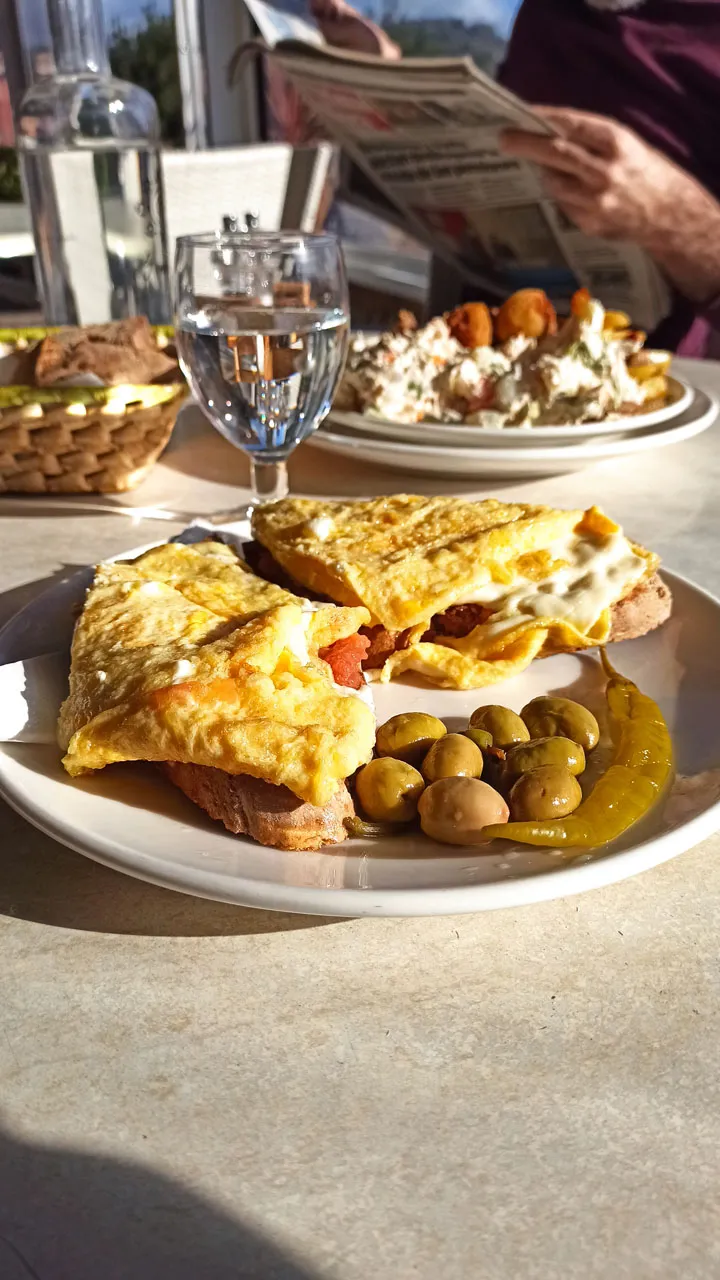
With sobrasada, camaiot and Mahón cheese
Learn more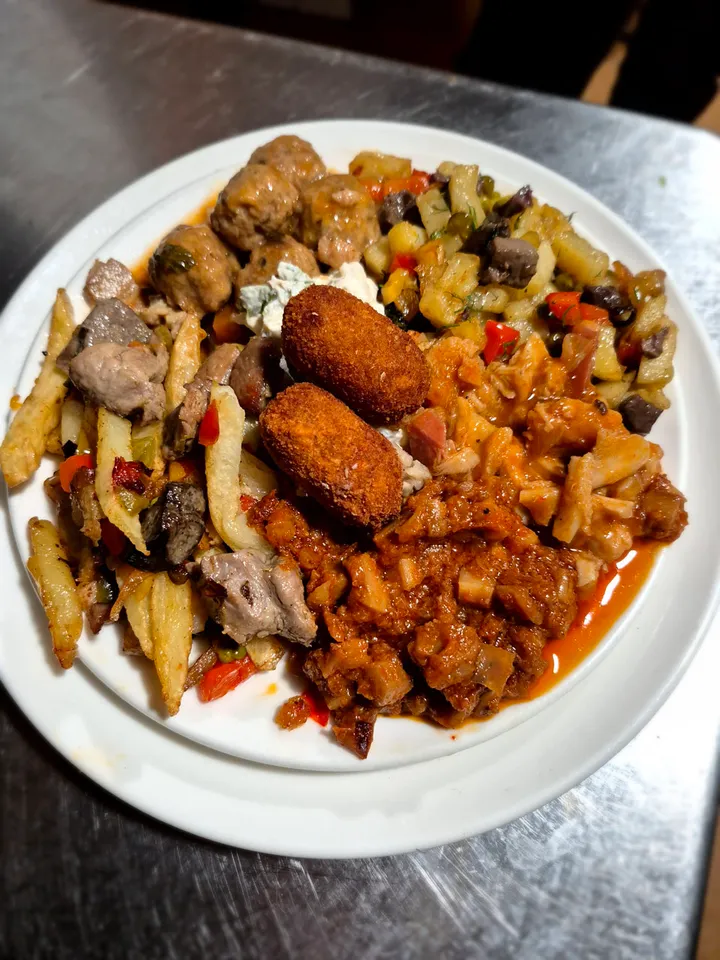
Caracoles cooked the traditional way
Learn more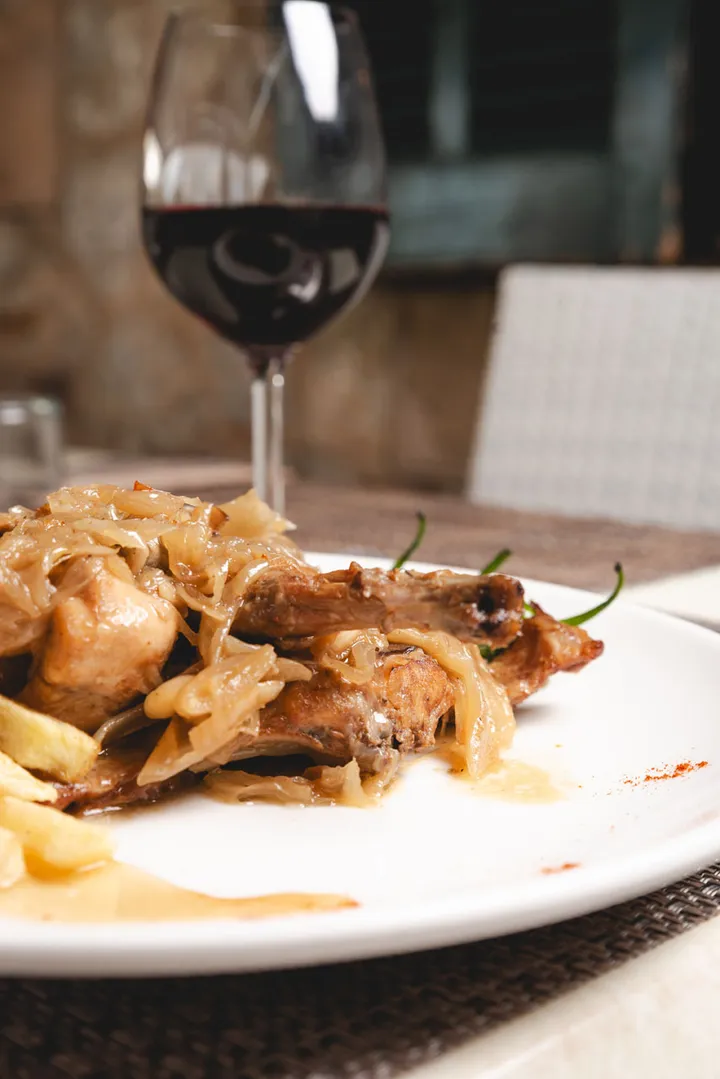
Vegetarian Mallorcan vegetable casserole
Learn moreFrequently asked
The questions we get most — about Mallorcan cuisine, the dishes, the restaurant, how to get here and what to expect.
From the kitchen
Caragols, grandma's way — three days of preparation, simmered in herb broth. The truth about Mallorcan snails.
Enthält: Molluscs
Juicy 250 g beef entrecote, slow-grilled over olive-wood embers — the Brasa main that anchors the menu.
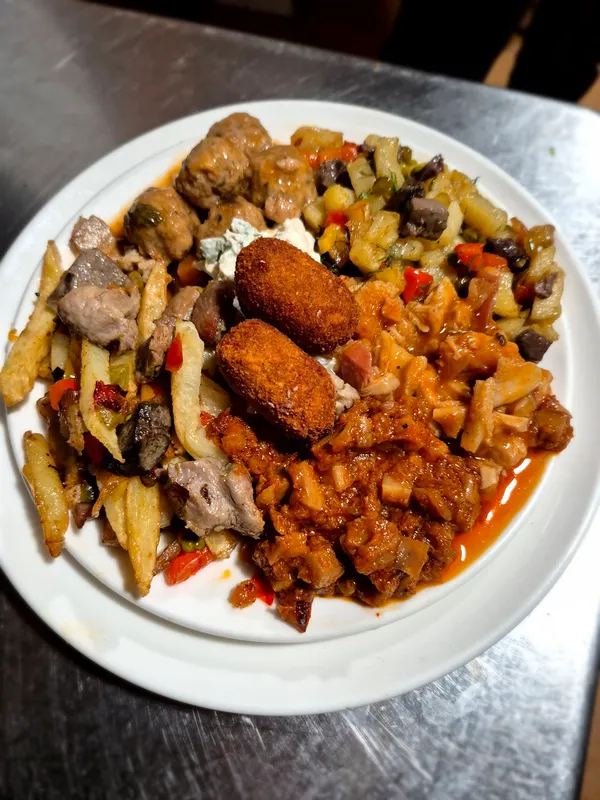
Frito Mallorquín — lamb offal with potatoes, peppers and wild fennel. The honest Sunday dish of the island.
Our signature dish: creamy rice with prawns and lamb — a unique surf-and-turf only found at Es Muntant.
Enthält: Crustaceans
THE most authentic pa amb oli: grilled sobrasada with a touch of honey, griddled camaiot and Mahón cheese on traditional Mallorcan country bread. Pure Mallorca, made the way it should be.
Enthält: Gluten, Milk
Our exclusive pa amb oli: with homemade alioli, fried peppers and our house combination of cured meats. The signature you'll only find at Es Muntant.
Enthält: Gluten, Eggs
Tumbet — layered aubergine, potato and peppers in tomato sauce, finished in the wood oven. Mallorca's vegetable architecture.
Wednesday to Sunday: 08:00 – 22:30
Monday & Tuesday closed
Kitchen hours
Snacks: 09:00 – 12:00
Lunch: 13:00 – 16:00 (Grill: 16:30)
Dinner: 19:00 – 22:30
About us
Restaurant Es Muntant is a family-run business in the traditional Establiments quarter, just minutes north of Palma. We cook with recipes passed down through generations — Frito, Tumbet, Caracoles, Pa amb Oli — and ingredients from island suppliers: fish from the Lonja, sobrasada from the village butcher, tomatoes from the Mercat.
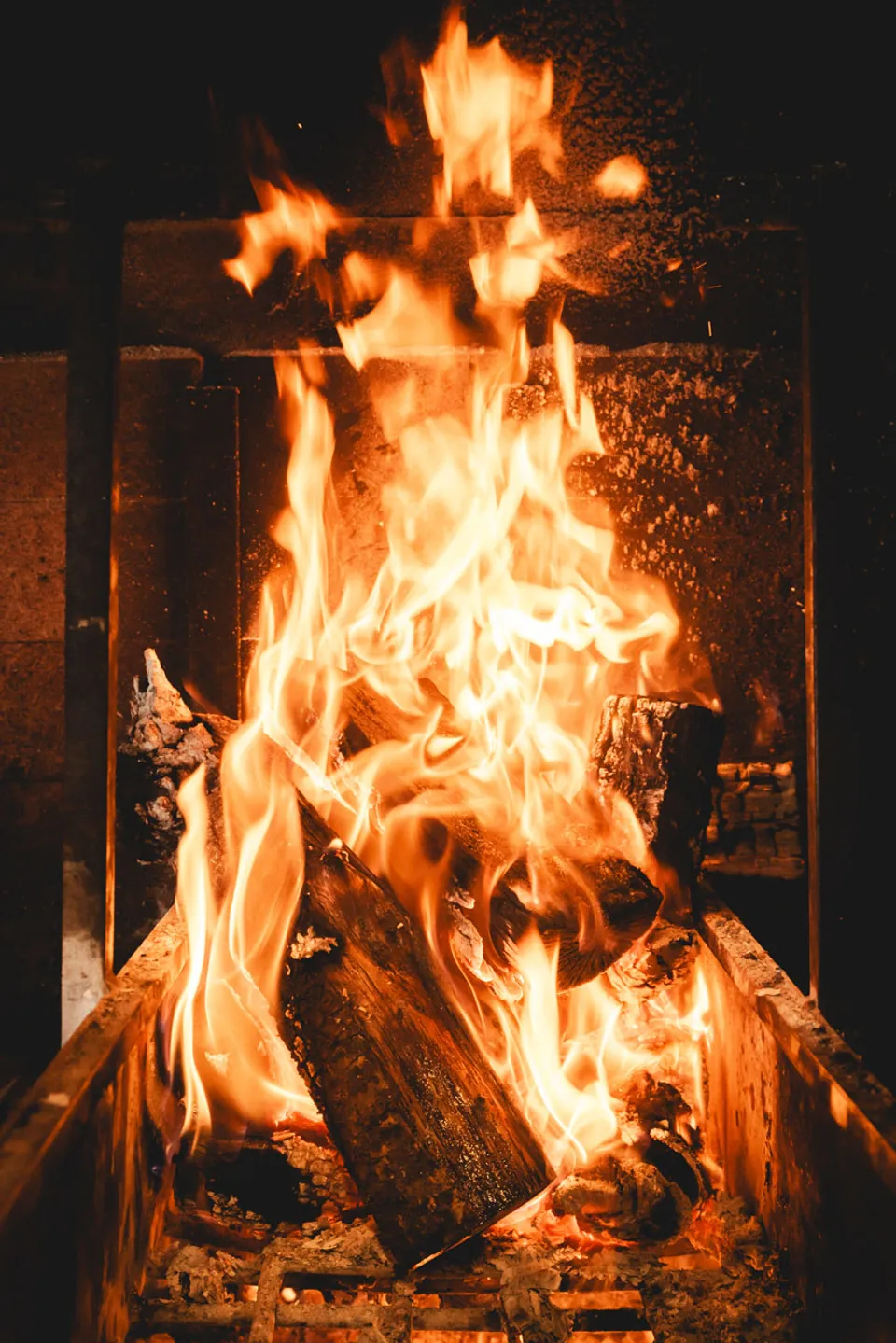
The grill runs on olive wood, not gas — the flavour only fire delivers. Regulars, hikers, cyclists and neighbours: we know many by name.
Tradition
Recipes passed through generations.
Wood-fired grill
Olive wood, not gas — the real brasa.
Local sourcing
Lonja, Mercat, sobrasada from the village butcher.
Family-run
In Establiments, with heart for the island.
How to find us
We're in the traditional Establiments quarter, just a five-minute drive from central Palma. By car via Carrer d'Esporles, by bus on TIB line 4 from Plaça d'Espanya, or on foot through the olive groves north of the city.
Address
Carrer d'Esporles 233, A (Norte)
07010 Palma, Illes Balears
Phone
Reviews
4.2 / 5 — 2166 Bewertungen
“Everything was great, from start till the end of the night. Live music was amazing. Pa amb oli was more than great — the best I have ever eaten on Mallorca. I am grateful for good food and a beautiful night.”
Sertan Eren BAKIR
8 November 2025
“Steaks cooked right in front of you on the wood-fired grill. Delicious food, friendly service, great Sunday lunch.”
JD L
30 October 2025
“Great food as usual, but importantly excellent service. Attentive and helpful to my 89-year-old mother — they helped her every step of the way. We always leave very happy.”
Paula Swanborough
25 September 2025
“El servicio es lo que realmente destaca en este restaurante. Los camareros son muy profesionales y conocen la carta perfectamente. Siempre dispuestos a ayudar y recomendar platos. Volveremos.”
Alberto Gil
13 November 2024